E/KS
Vent Cap, End-of-Line
Features
La caperuza proporciona protección
Contra los efectos del entorno (condiciones meteorológicas adversas, nidos de aves, etc.)
Dispositivo eficiente en coste
Cost Effective Device
Curvas de caudal certificadas
Certified Flow Performance Curves
Prácticamente libre de mantenimiento
Prácticamente libre de mantenimiento
Function and Description
In- and Out-Breathing – for use with Aggressive Products
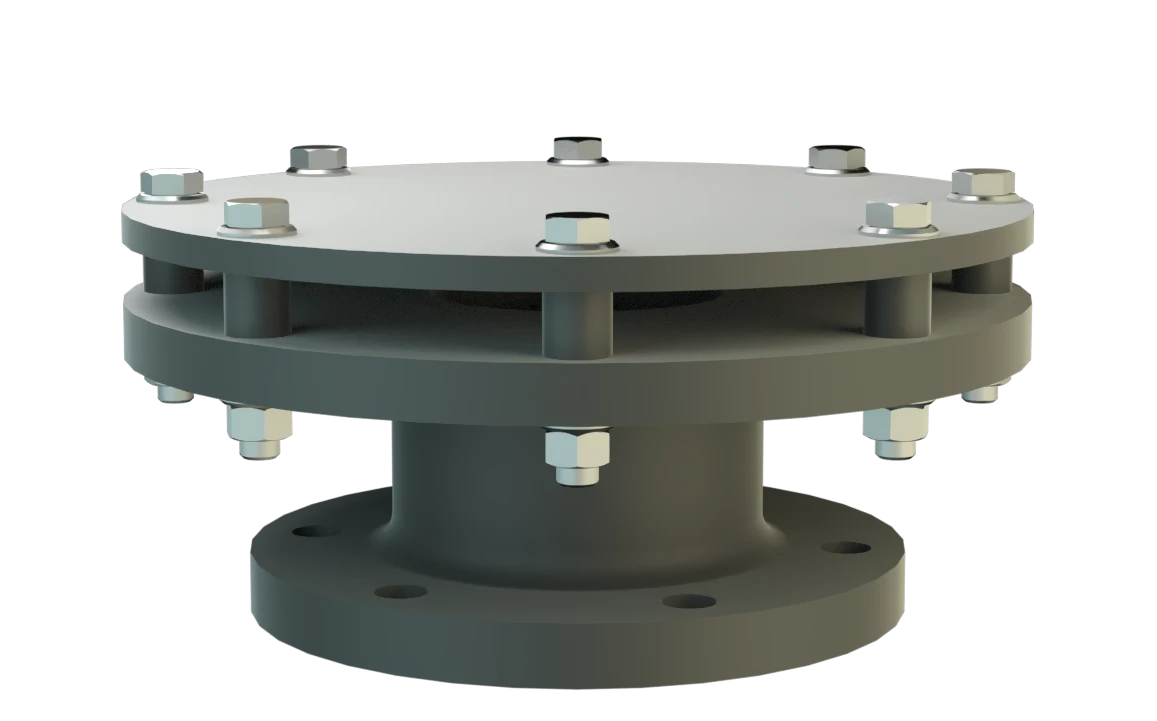
The E/KS vent cap allows vessels which are not pressurize to vent. The vent cap is made out of plastic and is the best solution in applications with aggressive media. This E/KS vent cap prevents rain and dirt from entering the vent line. The device is not flame transmission proof.
Protective Cover for Preventing Flame Transmission
It is often used in combination with Detonation Flame Arresters, when those are used in vent lines, installed at a position which creates a long run up distance from the end of the vent line to prevent endurance burning. The E/KS vent cap will then be installed at the end of that vent line to prevent particles or rain from entering the line.
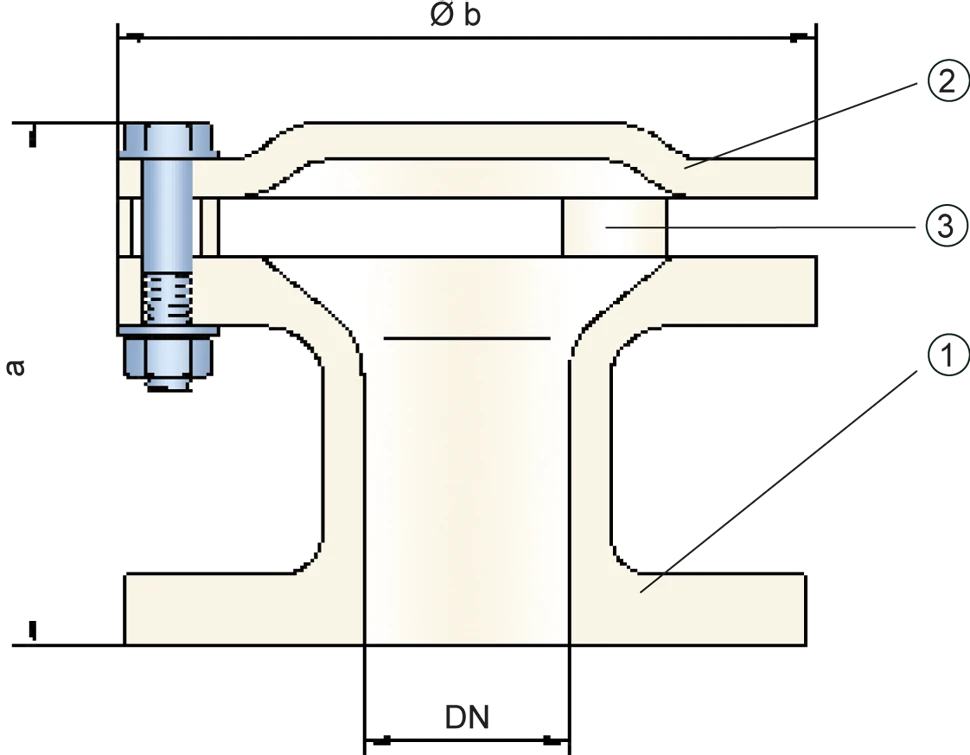
The vent caps main components are a housing (1), a weather hood (2) and spacers (3).
Product Data
Dimensiones
To select the nominal size (DN), please use the flow capacity charts on the following pages
| DN | 50 / 2" | 80 / 3" | 100 / 4" | 150 / 6" | 200 / 8" |
| a | 135 / 5.31 | 140 / 5.51 | 145 / 5.71 | 195 / 7.68 | 200 / 7.87 |
| b | 170 / 6.69 | 230 / 9.06 | 300 / 11.81 | 375 / 14.76 | 450 / 17.72 |
Dimensiones en mm / pulgadas
Selección de materiales
| Design | A | B | C |
| Housing | PE | PP | PVDF |
| Weather hood | PE | PP | PVDF |
Special materials upon request
Tipo de bridas de conexión
| EN 1092-1; Form B1 |
| ASME B16.5 CL 150 R.F. |
other types upon request
Diagrama de flujo volumétrico
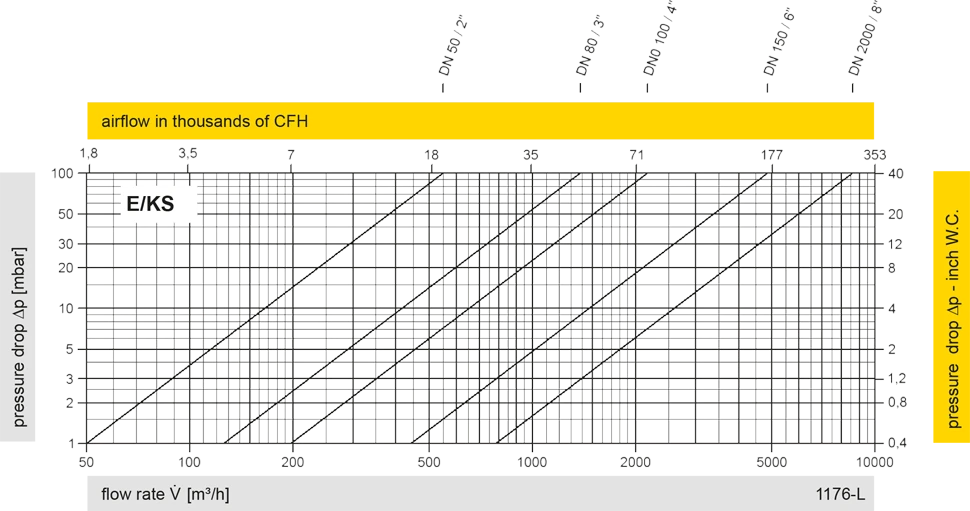
Los diagramas de flujo volumétrico han sido determinados con un banco de pruebas de caudal calibrado y certifi - cado por TÜV. El flujo volumétrico V. en [m³/h] y el CFH se refi eren a las condiciones estándar de referencia de aire según ISO 6358 (20°C, 1bar). La conversión a otras densidades y temperaturas están referidas en el Vol. 1: “Fundamentos Técnicos”.