Protego BR

VD/SV-HRL

Pressure/Vacuum Relief Valve deflagration- and endurance burning-proof
Features

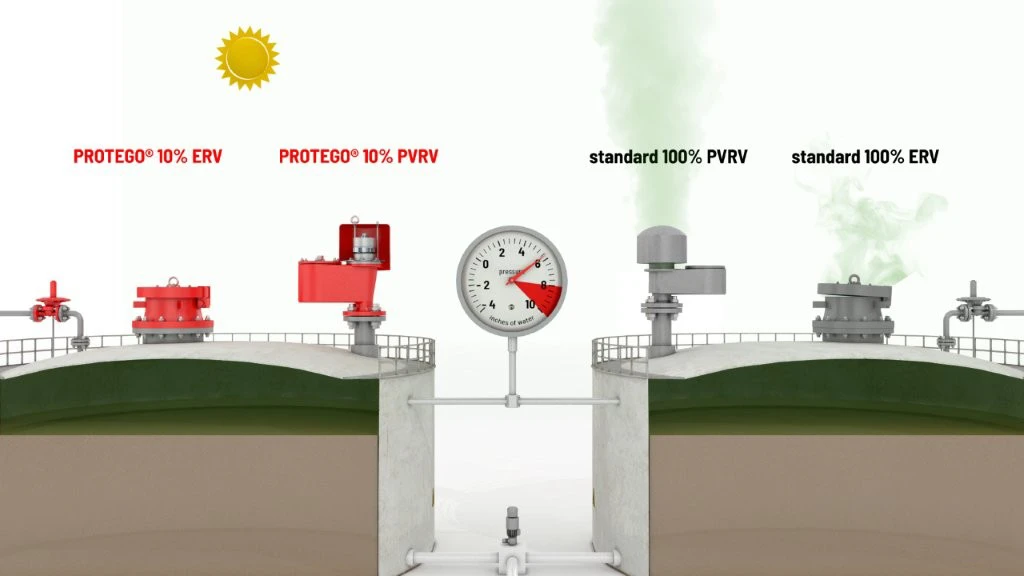
Tecnología del 10%
para un aumento mínimo de presión hasta alcanzar la apertura completa
Extrema estanqueidad
Lo que se traduce en las menores pérdidas posibles de producto y en una reducción de la contaminación ambiental
Mantenimiento óptimo de la presión
Basado en la tecnología del 10 %, la presión de tarado está muy próxima a la presión de apertura para un mantenimiento óptimo de la presión en el sistema, en comparación con la tecnología convencional del 40 % o del 100 %
Apertura y cierre más eficientes
La válvula abre más tarde y cierra antes que las válvulas convencionales
Plato de válvula guiado
El plato de válvula va guiado dentro del cuerpo para protegerlo frente a condiciones meteorológicas adversas
Sistema de protección conforme a ATEX
Puede utilizarse como sistema de protección en zonas con atmósferas potencialmente explosivas según ATEX
Seguridad contracombustión prolongada
Protección contra deflagraciones atmosféricas y combustión prolongada
Apagallamas integrado
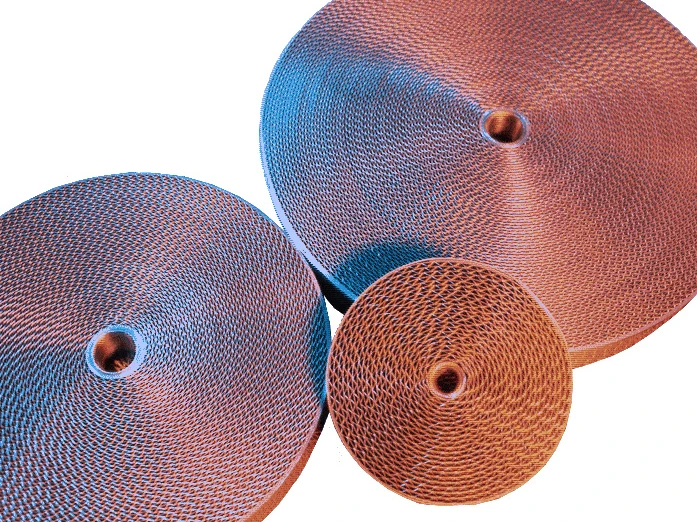
La unidad apagallamas PROTEGO® integrada ahorra espacio y peso y reduce costes
Diseño modular
Permite la sustitución y limpieza de los discos de filtro FLAMEFILTER® de forma individual
Function and Description

Combined Pressure and Vacuum Relief Valve
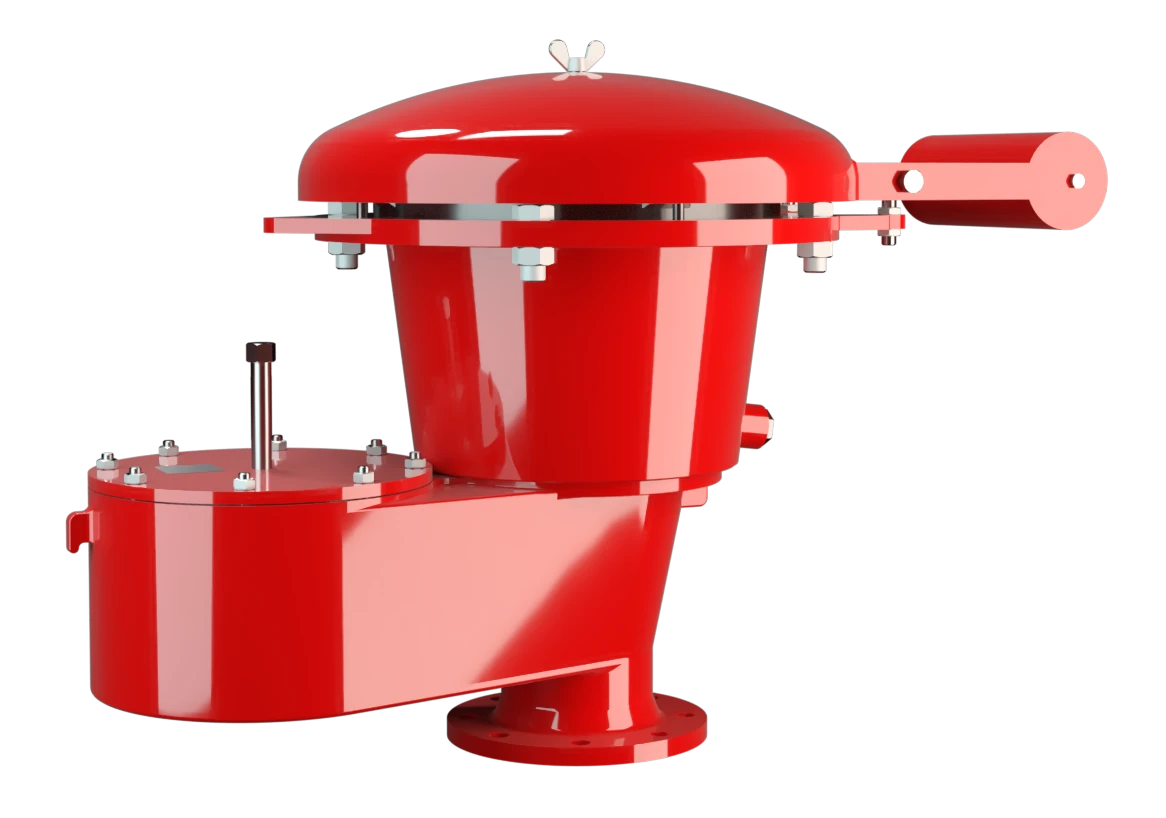
The Atmospheric Deflagration and Endurance Burning-Proof VD/SV-HRL Type PROTEGO® valve is a highly developed combined pressure/vacuum relief valve for high flow capacities with an integrated Flame Arrester. It is primarily used as a device for flame transmission proof in-breathing and out-breathing on tanks, containers, and process equipment. The valve offers reliable protection against overpressure and vacuum, prevents the in-breathing of air and product losses almost up to the set pressure, and protects against atmospheric eflagration and endurance burning if stabilized burning occurs.

10%-Technology

The PROTEGO® Flame Arrester Unit is designed to achieve minimum pressure drop with maximum safety. The PROTEGO® VD/SV-HRL device is available for substances of explosion group IIA (NEC group D MESG > 0.9 mm). When the set pressure is reached, the valve starts to open and reaches full lift within 10% overpressure. This unique 10% technology enables a set pressure that is only 10% below the maximum allowable working pressure (MAWP) or maximum allowable working vacuum (MAWV) of the tank. After years of development, this typical opening characteristic of a safety relief valve is now also available for the low pressure range.

Advanced Manufacturing Technology

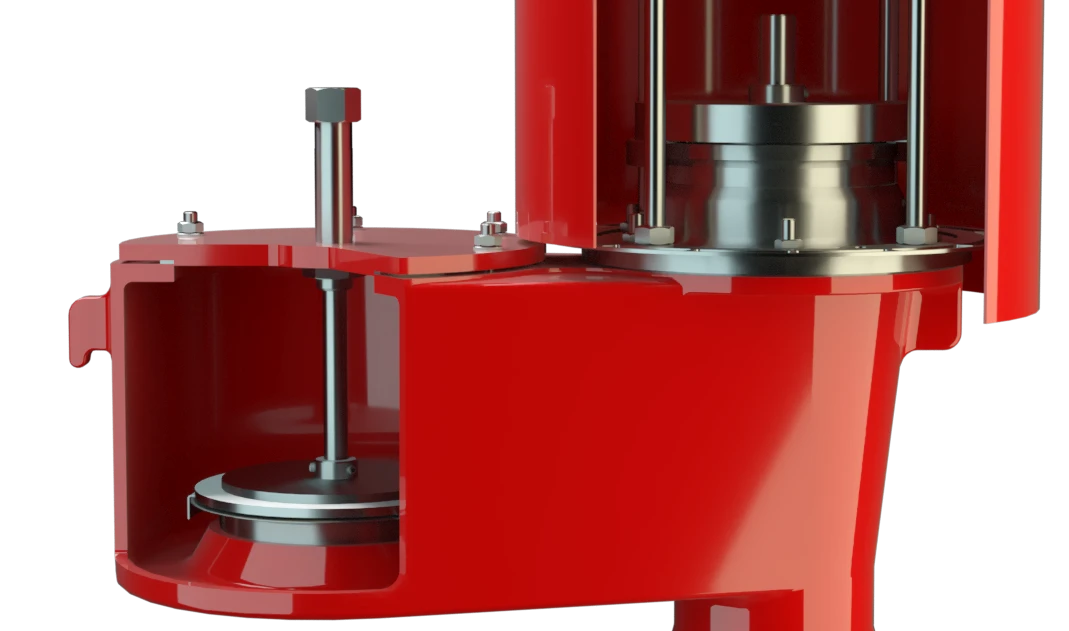
The tank pressure is maintained up to the set pressure with a tightness that is above The normal standards due to our tate-of-the-art manufacturing technology. This feature is ensured by valve seats made of high quality stainless steel and with individually lapped valve pallets (1), or with an air cushion seal (2), in conjunction with high quality FEP diaphragm. The valve pallets are also available with a PTFE seal to prevent them from sticking when sticky substances are used and to enable the use of corrosive fluids. After the overpressure s released, the valve re-seats and provides a tight seal.

Main Component – PROTEGO® Flame Arrester Unit

If the set pressure is exceeded, explosive gas/product vapor/air mixtures are released into the atmosphere. If this mixture ignites, the integrated PROTEGO® Flame Arrester Unit (3) revents flame transmission into the tank. If additional mixture continues to flow and stabilized occurs, the integrated Flame Arrester prevents flashback as a result of endurance burning. The valve is protected and also fulfils its function under thesesevere conditions. The spring-loaded weather hood opens as soon as the melting element (4) melts.

Many Individual Certifications

The valve can be used at an operating temperature of up to +60°C /140°F and meets he requirements of European tank design standard EN 14015 (Appendix L) and ISO 28300 (API 2000). EU conformity according to the currently valid ATEX directive. Approvals according to other national/international regulations on request.
Product Data

Dimensiones

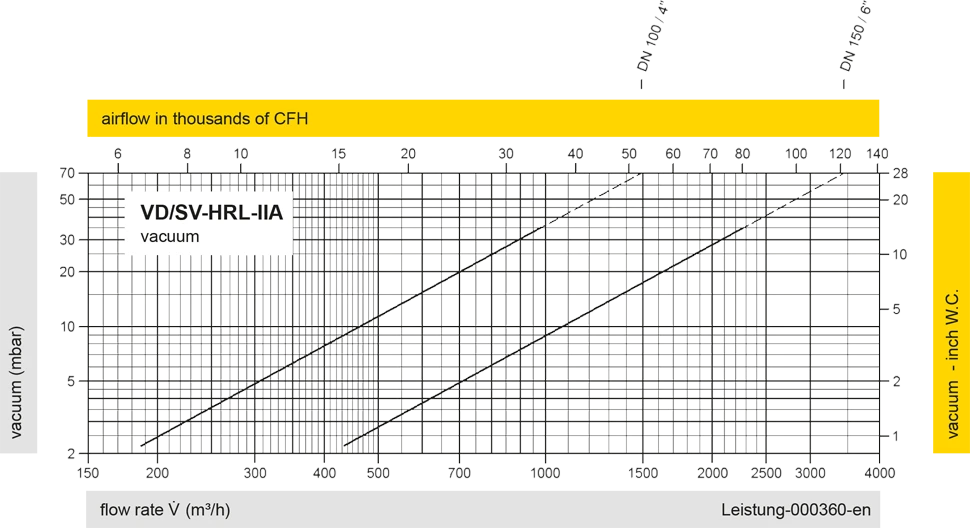
To select the nominal size (DN), please use the flow capacity charts on the following pages

DN100 / 4" 150 / 6"
a650 / 25.59760 / 29.92
b1000 / 39.371155 / 45.47
c600 / 23.62600 / 23.62

Dimensiones en mm / pulgadas

Selección del grupo de explosión

MESGExpl. Gr. (IEC / CEN)Gas Group (NEC)
> 0,90 mmIIAD

Special approvals upon request

Selección de materiales para la vivienda

Design AB
HousingSteelStainless Steel
Valve saetsStainless SteelStainless Steel
Gasket
PTFE
PTFE
Weather hoodSteelStainless Steel
Flame arrester unitA, BB

Special materials upon request

Combinación de materiales para la unidad apagallamas

Ausführung AB
FLAMEFILTER® cageSteelStainless Steel
FLAMEFILTER®Stainless SteelStainless Steel

Special materials upon request

Selección de materiales para la válvula de presión

Design ABCD
Pressure range [mbar]
[inch W.C.]
+3.5 up to +5.0
+1.4 up to +2.0
>+5.0 up to +14
>+2.0 up to +5.6
>+14 up to +35
>+5.6 up to +14
>+14 up to +35
>+5.6 up to +14
Valve palletAluminiumStainless SteelStainless SteelStainless Steel
SealingFEPFEPMetal to MetalPTFE

Special material as well as higher set pressure upon request

Selección de materiales para la válvula de vacío

Design ABCD
Vacuum range [mbar]
[inch W.C.]
-2.0 up to -3.5
-0.8 up to -1.4
<-3.5 up to -14
<-1.4 up to -5.6
<+14 up to +35
<-5.6 up to -14
<-14 up to -35
<-5.6 up to -14
Valve palletAluminiumStainless SteelStainless SteelStainless Steel
SealingFEPFEPMetal to MetalPTFE

Special material as well as higher set vacuum upon request

Tipo de bridas de conexión

EN 1092-1; Form B1
ASME B16.5 CL 150 R.F.

other types upon request

Diagrama de flujo volumétrico
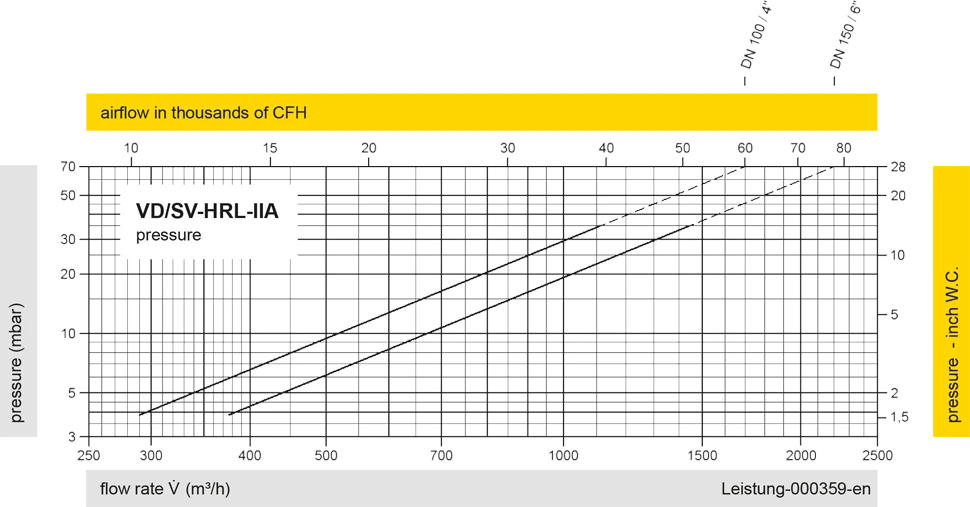
Los diagramas de flujo volumétrico han sido determinados con un banco de pruebas de caudal calibrado y certifi - cado por TÜV. El flujo volumétrico V. en [m³/h] y el CFH se refi eren a las condiciones estándar de referencia de aire según ISO 6358 (20°C, 1bar). La conversión a otras densidades y temperaturas están referidas en el Vol. 1: “Fundamentos Técnicos”.
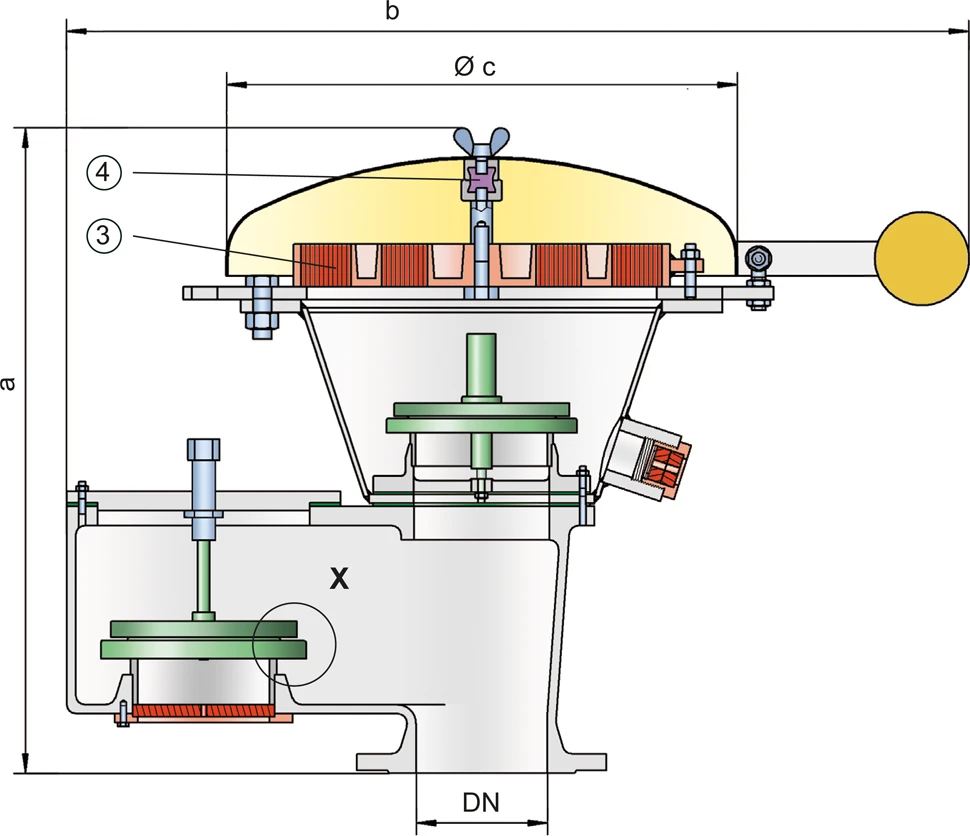

Detail X

Detail X